When it comes to steak, top sirloin is the unsung hero of the meat world. It’s tender juicy and bursting with flavor—everything a steak lover dreams of. But let’s face it, cooking steak can feel like a high-stakes game of culinary roulette. One minute you’re a grill master, and the next you’ve turned your prized cut into a shoe sole. Fear not, though!
With a few simple tricks up your sleeve, he or she can transform that top sirloin into a mouthwatering masterpiece. Whether it’s a backyard barbecue or an intimate dinner, mastering this cut will impress friends and family alike. So grab your apron and let’s dive into the delicious world of steak cooking—where every bite is a victory and every grill mark is a badge of honor.
Choosing the Right Sirloin Steak
Choosing the right sirloin steak enhances the overall cooking experience. Various factors contribute to the quality and flavor of this popular cut.
Understanding Cuts and Grades
Understanding the different cuts and grades helps in selecting premium beef. Sirloin steak may include top sirloin, bottom sirloin, and traditional sirloin, each offering unique flavor profiles and tenderness. The USDA grades beef based on quality, with Prime, Choice, and Select being the most common. Prime steak represents the highest quality, showcasing abundant marbling and tenderness. Choice steak offers great flavor and tenderness but has less marbling. Select is leaner with less fat. Determining the cut that aligns with personal preferences enables optimal cooking results.
Selecting Fresh Meat
Selecting fresh meat contributes significantly to meal quality. When choosing sirloin steak, look for deep red color with visible marbling, indicating quality and flavor. A firm texture hints at freshness, while a dull color can suggest age. Always examine packaging for expiration dates and potential bruising. For the best experience, purchasing from local butchers or reputable grocery stores ensures quality. Freshness translates to elevated taste, making careful selection crucial before cooking.
Preparing the Steak
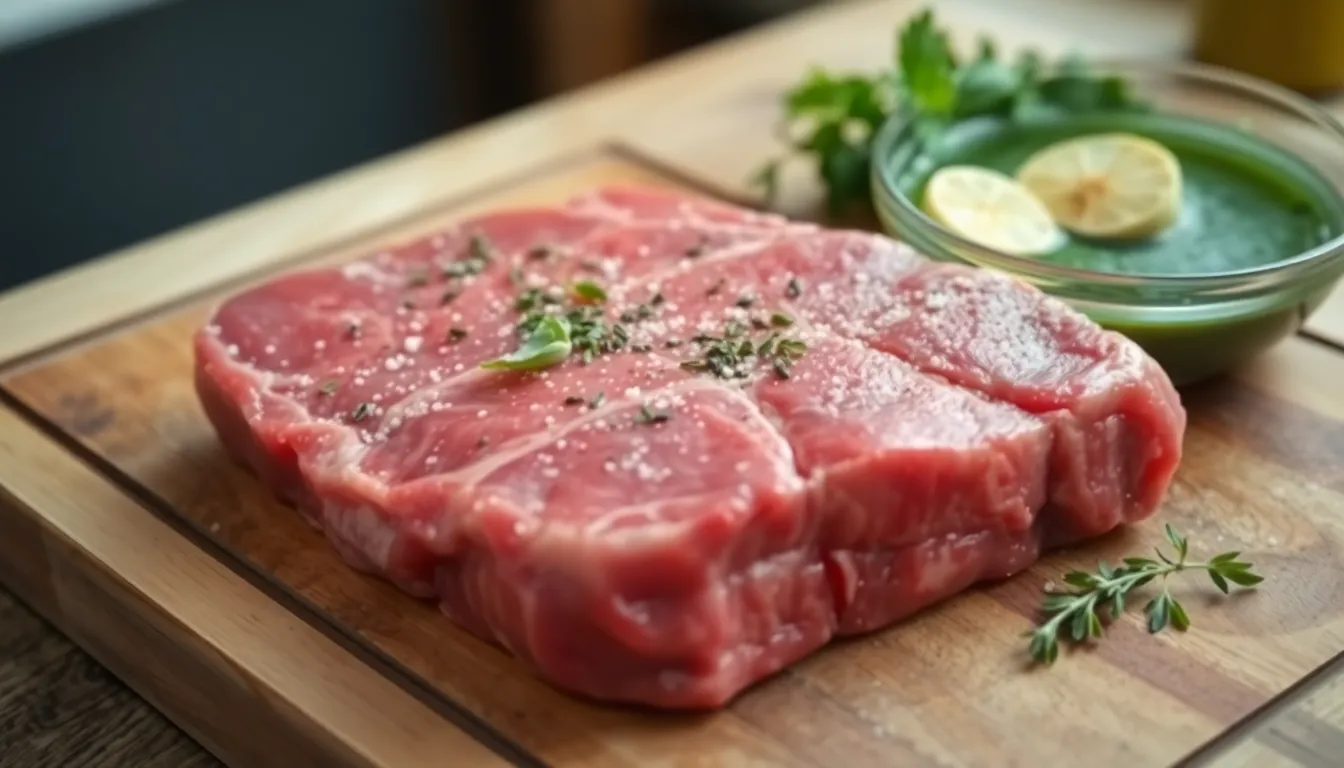
Proper preparation of the top sirloin steak enhances flavor and tenderness. Focus on seasoning and marinating to achieve optimal results.
Seasoning Techniques
Seasoning plays a crucial role in enhancing a steak’s natural flavors. Start by generously applying salt and pepper to both sides of the steak. This simple combination provides a flavorful base. Experiment with additional seasonings like garlic powder, onion powder, or smoked paprika for depth. Fresh herbs such as rosemary or thyme can also be effective. Ensuring the steak sits at room temperature for about 30 minutes before cooking allows the flavors to penetrate better. Achieving a balance in seasoning enhances the overall eating experience.
Marinating Options
Marinating adds unique flavors and tenderizes the meat. Common base ingredients include olive oil, vinegar, or citrus juice combined with spices and herbs. A marinade typically includes ingredients like soy sauce, garlic, and Worcestershire sauce for a savory profile. For added sweetness, consider honey or brown sugar. Allow the steak to marinate for at least 30 minutes, but up to 24 hours maximizes flavor absorption. Avoid using acidic marinades for prolonged periods, as they may break down the meat’s texture. Jessica recommends a simple marinade of balsamic vinegar, rosemary, and garlic for an aromatic flavor boost.
Cooking Methods
Cooking a top sirloin steak can be accomplished through various methods, each bringing out unique flavors and textures. Here are three popular techniques that guarantee delicious results.
Grilling the Steak
Grilling enhances the natural flavors of top sirloin, producing a delightful charred crust. To achieve the best outcome, preheat the grill to high heat, around 450°F to 500°F. Season the steak liberally with salt and pepper before placing it on the grill. Cooking time typically ranges from 4 to 5 minutes per side for medium-rare, but this can vary based on thickness. Always let the steak rest for about 5 minutes after grilling, allowing juices to redistribute and ensuring a tender bite.
Pan-Searing the Steak
Pan-searing offers a fantastic way to develop a flavorful crust using a skillet on the stovetop. Start by heating a heavy skillet, like cast iron, over medium-high heat with a bit of oil. Once the oil shimmers, carefully add the seasoned steak. A cooking time of 3 to 4 minutes per side results in a beautiful crust, with an internal temperature of about 130°F for medium-rare. Finish with a pat of butter to enrich flavors before letting the steak rest for a few minutes.
Broiling the Steak
Broiling provides an excellent option when indoor cooking is preferred. Set the oven rack just a few inches from the broiler element and preheat the broiler for about 5 minutes. Place the seasoned steak on a broiler pan for proper heat distribution. Cook for approximately 5 to 6 minutes per side, checking for the desired doneness. Broiling can produce similar results to grilling, with an enticing crust and juicy interior, so resting after cooking is essential for the best experience.
Checking Steak Doneness
Knowing how to check steak doneness ensures a perfect top sirloin. Two common methods include using a temperature guide and recognizing visual cues.
Temperature Guide
Cooking meat to the right temperature is essential for enjoying the best flavors and textures. The USDA recommends specific safe cooking temperatures for beef. Aim for 130°F to 135°F for medium-rare, 140°F to 145°F for medium, 150°F to 155°F for medium-well, and 160°F and above for well-done. Utilizing an instant-read thermometer provides the most accurate results. Insert it into the thickest part of the steak, avoiding contact with bone or fat. Always allow the steak to rest for several minutes after cooking. Resting lets the juices redistribute, enhancing the overall taste.
Visual Cues
Visual indicators play a crucial role in assessing doneness. A perfectly cooked steak exhibits a caramelized exterior with clear marks from the grill or pan. Checking for color at the center provides additional information. A medium-rare steak typically appears warm red, while medium ones show a pink center. Juices should run clear for well-done options, indicating a thorough cook. Finally, the firmness of the meat will change with doneness levels; softer feels for rare and firmer for well-done. Trusting these visual cues helps achieve the desired doneness without needing to cut into the steak.
Serving Suggestions
Serving top sirloin steak offers numerous delicious possibilities that enhance the meal experience.
Pairing with Sides
Classic sides complement top sirloin steak effectively and create a well-rounded plate. Roasted vegetables add flavor and crunch, while creamy mashed potatoes provide a comforting element. Consider grilled asparagus for a vibrant touch or sautéed green beans for a fresh contrast. Salad options also work well; a Caesar salad brings freshness, and a simple mixed green salad balances richness. Choosing sides that bring out the steak’s natural flavors makes the meal more enjoyable.
Recommended Sauces
Sauces elevate the flavor of top sirloin steak significantly, adding richness and complexity. A red wine reduction creates a deep, savory complement to the meat. Chimichurri sauce offers a zesty, herbaceous kick that brightens each bite. For a classic approach, béarnaise sauce incorporates rich flavors and creaminess. Garlic butter enhances the steak’s juiciness with a rich, aromatic touch. Opting for a sauce that aligns with personal taste preferences enhances the overall dining experience.
Cooking a top sirloin steak can be a rewarding experience that elevates any meal. By selecting the right cut and employing effective cooking techniques, anyone can achieve restaurant-quality results at home. The right seasonings and cooking methods play a crucial role in enhancing the steak’s natural flavors.
Remember to let the steak rest after cooking to lock in the juices and ensure a tender bite. Pairing the steak with complementary sides and sauces can further enrich the dining experience. With practice and attention to detail, mastering top sirloin steak will not only impress guests but also turn everyday meals into memorable occasions. Enjoy the journey of perfecting this delicious cut of meat.