In a world where Mother Nature sometimes feels like a cranky roommate, sustainable building materials are the ultimate peace offering. They’re not just eco-friendly; they’re the superheroes of construction, swooping in to save the day while keeping our planet happy and healthy. Imagine building a cozy home that doesn’t just look good but also gives a high-five to the environment.
These materials are like the cool kids at the construction party, offering everything from recycled steel to bamboo that grows faster than your neighbor’s gossip. As the demand for greener living rises, it’s time for builders and homeowners to embrace these sustainable options. After all, who wouldn’t want to build a future that’s as stylish as it is responsible? Let’s dive into the world of sustainable building materials and discover how they can transform spaces while saving the planet—one eco-friendly brick at a time.
Overview Of Sustainable Building Materials
Sustainable building materials offer eco-friendly alternatives for construction projects. These materials contribute to environmental health and energy efficiency. For instance, recycled steel provides strength and durability while reducing waste. Fast-growing bamboo serves as a renewable resource that grows significantly faster than traditional timber.
Reclaimed wood is another popular option, often sourced from old buildings. This wood reduces deforestation and adds unique character to structures. Straw bales can create well-insulated walls, delivering thermal performance without contributing to high carbon emissions.
Natural insulation materials, like sheep’s wool and cellulose, excel in energy savings. These options help regulate indoor temperatures and minimize heating and cooling costs. Furthermore, landscaping with native plants can complement sustainable architecture by enhancing biodiversity and reducing water usage.
The demand for sustainable building materials continues to rise, driven by consumer awareness and regulatory actions. Builders and homeowners increasingly prioritize green alternatives when making construction decisions. As a result, the construction industry undergoes a significant transformation, focusing on eco-friendly practices. Choosing sustainable materials not only supports responsible living but also contributes to a healthier planet. Each option plays a role in creating stylish, responsible living spaces that align with modern environmental standards.
Types Of Sustainable Building Materials
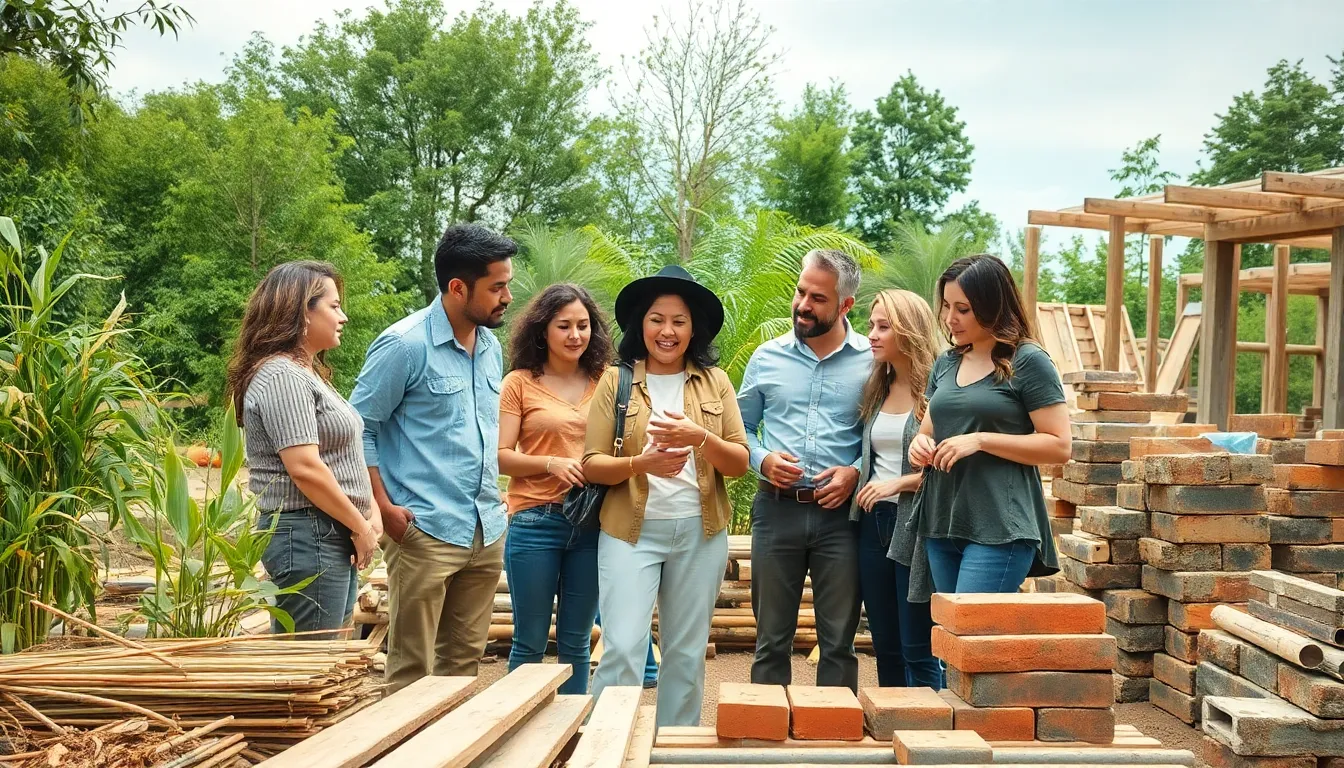
Various types of sustainable building materials exist, each contributing to eco-friendly construction. Their benefits span efficiency, reduced waste, and enhanced aesthetics.
Recycled Materials
Recycled materials play a crucial role in sustainable building. Using recycled steel minimizes landfill waste while delivering strength to structures. Reclaimed bricks, another option, retain character and reduce the extraction impact on resources. Recycled glass transforms into beautiful tiles and countertops, providing a modern look while minimizing resource consumption. Innovations in recycling processes continue to expand the types of materials available for construction, making eco-conscious building choices more accessible.
Renewable Materials
Renewable materials offer sustainability through their ability to regenerate quickly. Bamboo, for example, grows rapidly, making it an excellent alternative to traditional hardwoods. Cork, harvested from the bark of cork oak trees, can be regrown without harming the tree itself. These materials not only reduce deforestation but also contribute to efficient insulation and aesthetic enhancement. Fast-growing plantations ensure a steady supply, supporting building practices that prioritize environmental health.
Low-Impact Materials
Low-impact materials focus on minimizing environmental footprints. Straw bales provide excellent insulation while using agricultural byproducts, showcasing sustainability in construction. Natural insulation options like cellulose, derived from recycled paper, regulate indoor climate effectively and reduce carbon emissions. Utilizing materials like rammed earth or compressed earth blocks can offer durable and energy-efficient solutions. Prioritizing these materials leads to a more sustainable construction approach that benefits homeowners and the planet alike.
Benefits Of Using Sustainable Building Materials
Sustainable building materials offer a range of benefits that positively impact both the environment and the economy. Utilizing these materials can lead to a more responsible construction practice.
Environmental Benefits
Sustainable building materials significantly reduce environmental impact. Recycled materials, such as glass and steel, divert waste from landfills, promoting waste reduction. Renewable materials like bamboo regenerate quickly, minimizing deforestation and promoting biodiversity. Utilizing natural insulation options, such as sheep’s wool and cellulose, enhances energy efficiency by regulating indoor temperatures, leading to lower energy costs. Straw bales provide excellent insulation while ensuring low carbon emissions. Incorporating native plants in landscaping further benefits the environment by enhancing local biodiversity and reducing water consumption.
Economic Advantages
Investing in sustainable building materials can lead to significant economic advantages. Buildings constructed with eco-friendly materials often experience lower operating costs due to reduced energy consumption. Eco-friendly homes typically demand higher property values, attracting environmentally conscious buyers. Using durable and low-maintenance materials also lowers long-term maintenance expenses. Incentives and rebates for sustainable construction can provide added financial benefits. Prioritizing eco-friendly options supports local economies by creating jobs in recycling, manufacturing, and sustainable farming, strengthening community resilience.
Challenges In Implementing Sustainable Building Materials
Implementing sustainable building materials presents various challenges. Navigating these obstacles requires awareness and strategic planning.
Availability And Accessibility
Limited availability of sustainable options can pose challenges. Some eco-friendly materials, such as reclaimed wood or bamboo, may not be readily accessible in all regions. Local sourcing often influences the ability to utilize these materials effectively. Additionally, supply chains for sustainable materials can lack robustness, affecting timely project completion. Builders face difficulties in accessing reliable suppliers who offer consistent quality. Increased demand for these materials can lead to shortages, giving rise to delays and increased project timelines.
Cost Considerations
Cost considerations significantly impact the adoption of sustainable materials. Initial expenses for eco-friendly products like recycled steel and natural insulation often exceed traditional materials. Builders and homeowners sometimes perceive these upfront costs as prohibitive despite long-term savings. Evaluating the total cost of ownership reveals potential savings, as sustainable materials often reduce energy expenses and maintenance costs. Government incentives and green financing options can help mitigate the initial investment. Long-term benefits frequently outweigh the initial financial hurdles, underscoring the importance of considering sustainable materials in building practices.
Future Trends In Sustainable Building Materials
Growing interest in sustainable building materials drives innovation in the construction industry. Bio-based materials gain traction as alternatives to traditional options. These materials, derived from natural resources, reduce carbon footprints and enhance energy efficiency. For instance, mycelium, a fungal material, offers a biodegradable solution for insulation and packaging.
Increasing focus on circular economy principles influences material selection. The recycling of construction waste into new building products exemplifies this trend. Products like recycled concrete not only minimize waste but also provide structural integrity. Various companies explore ways to utilize recycled plastic, merging aesthetics and functionality.
Innovations in energy-efficient technologies shape future building practices. Smart materials, capable of adapting to environmental changes, emerge as pivotal components. Photochromic and thermochromic materials adjust their properties based on light and temperature, contributing to overall energy savings. Buildings equipped with these intelligent materials significantly lower energy consumption.
Integrating renewable energy solutions into building materials offers additional advantages. Solar roofing tiles and energy-generating windows transform structures into self-sustaining entities. These innovations allow buildings to produce their own energy, while reducing reliance on non-renewable sources.
Collaboration among architects, builders, and material scientists fosters advancements in sustainable construction. New partnerships emphasize research and development of eco-friendly alternatives, establishing a foundation for growth. As this collaboration strengthens, the market sees a rise in innovative materials that prioritize sustainability.
Technological advancements also facilitate improved sustainability practices. 3D printing technologies enable the creation of complex structures with minimal waste. This improves resource utilization and allows for unique architectural designs using sustainable materials. Overall, these emerging trends in sustainable building materials signify significant progress toward eco-friendly construction practices.
Embracing sustainable building materials is a crucial step toward a greener future. These materials not only enhance the aesthetic appeal of structures but also significantly contribute to environmental health and energy efficiency. As the construction industry evolves, the integration of innovative options like bio-based materials and smart technologies will further redefine building practices.
While challenges remain in accessibility and cost, the long-term benefits of sustainable choices far outweigh initial investments. By prioritizing eco-friendly materials, builders and homeowners can create stylish living spaces that support both the planet and local economies. The shift toward sustainability is not just a trend; it’s a necessary movement that promises a healthier environment for generations to come.