Table of Contents
ToggleBosch builds some of the quietest, most efficient dishwashers on the market, until they don’t work. A puddle under the unit, a flashing error code, or dishes that come out still grimy can throw off your whole kitchen routine. The good news? Most Bosch dishwasher issues don’t require a service call. With basic tools and a little troubleshooting know-how, homeowners can tackle drainage clogs, door latch failures, and spray arm blockages themselves. This guide walks through the most common Bosch dishwasher problems and gives step-by-step repair solutions that’ll get your machine back to whisper-quiet operation.
Key Takeaways
- Most common Bosch dishwasher repair issues—including clogs, door latch failures, and spray arm blockages—can be resolved by homeowners using basic tools like a screwdriver, wrench, and multimeter without professional service.
- Standing water and poor drainage are often caused by clogged filters, kinked drain hoses, or failed drain pumps; cleaning the three-part filter system monthly prevents buildup and extends dishwasher life.
- A worn door gasket, loose hose connections, or misaligned spray arms are the primary sources of leaks; regular inspection of these components can prevent water damage under your dishwasher.
- Door latch failures and tripped thermal fuses are the leading causes of Bosch dishwashers that won’t start; checking the breaker panel and testing the latch mechanism first saves time and money on unnecessary service calls.
- DIY Bosch dishwasher repairs for simple part replacements like gaskets or pumps typically cost $20–$150, versus $150–$250 service call fees, making basic troubleshooting worthwhile before contacting a technician.
Understanding Your Bosch Dishwasher Before You Begin
Before pulling out tools, familiarize yourself with how Bosch dishwashers differ from other brands. Most models use a condensation drying system instead of a heating element, which means they rely on rinse aid and proper loading to dry effectively. The control board is typically mounted on the top edge of the door, and the filter assembly sits at the tub bottom, both common trouble spots.
Bosch uses a three-part filter system: a coarse screen, a fine mesh filter, and a micro-filter. These trap food particles but clog easily if not cleaned monthly. The drain pump is usually located beneath the filter housing, accessible by removing the lower spray arm and filter assembly.
Safety first: always disconnect power at the breaker or unplug the unit before attempting any repair. Water and electricity don’t mix. If you’re accessing the door panel or control board, you’ll also want to turn off the water supply at the shut-off valve under the sink. Keep a shallow pan and towels handy, residual water in hoses and the sump will spill when disconnected.
Most Bosch dishwasher repairs don’t require special tools. A Phillips screwdriver, adjustable wrench, needle-nose pliers, and a multimeter for testing electrical continuity cover 90% of jobs. Replacement parts are model-specific, so have your dishwasher’s model number (found on the door frame or interior side panel) ready when ordering. Bosch dishwasher service near me searches often yield technicians who charge $150–$250 just for a diagnostic visit, so DIY troubleshooting can save real money if the fix is straightforward.
Most Common Bosch Dishwasher Problems and Their Causes
Dishwasher Won’t Start or Turn On
A Bosch dishwasher that won’t power up usually points to one of three culprits: a tripped breaker, a faulty door latch, or a blown thermal fuse. Start with the simplest check, confirm the unit is receiving power. Check your home’s breaker panel and reset any tripped switches. If the breaker’s fine, inspect the door latch. Bosch models won’t start unless the door is fully closed and the latch engages a micro-switch inside the control assembly.
Open the door and listen for a distinct click when closing it. No click? The latch striker or catch may be worn or misaligned. You can often adjust the latch striker by loosening its mounting screws and shifting it slightly. If the latch mechanism itself is broken, replacement latches run $20–$40 and install with two screws.
The thermal fuse is a one-time safety device that blows if the dishwasher overheats. It’s located on the control board or near the heating element. Use a multimeter to test for continuity, if the fuse reads infinite resistance, it’s blown and must be replaced. Thermal fuses cost $10–$15 but require removing the door panel to access. If you’re not comfortable working with electrical components, this is a good time to call in a pro.
Poor Cleaning Performance and Water Circulation Issues
Dishes coming out dirty usually means water isn’t reaching them, often due to clogged spray arms or a failing circulation pump. Bosch uses upper and lower spray arms that spin to distribute water. Remove both arms (they typically twist off counterclockwise) and inspect the nozzles. Hard water deposits and food particles can block these small openings.
Clean spray arm nozzles with a toothpick or thin wire, then rinse under running water. While the arms are off, spin them by hand to check for obstructions in the mounting hub. If the arms don’t spin freely during a cycle, the water pressure from the pump may be insufficient.
The circulation pump moves water from the sump through the spray arms. If you hear the pump running but water isn’t spraying, the pump impeller may be jammed with debris or a broken piece of glass. Access the pump by removing the lower spray arm, filter assembly, and sump cover (usually held by a few Torx screws). Clear any obstructions and check the impeller for cracks. A damaged impeller requires pump replacement, a $100–$150 part that involves disconnecting hoses and electrical connectors.
Don’t overlook the inlet valve. If it’s clogged or failing, the dishwasher won’t fill with enough water to clean properly. The valve is located behind the lower kickplate at the front of the unit. Remove the kickplate (it snaps off or has a few screws) and inspect the valve screen for sediment. A clogged screen can be cleaned: a faulty valve that doesn’t open when powered should be replaced.
Step-by-Step Repair Solutions for Bosch Dishwashers
Fixing Drainage Problems and Standing Water
Standing water at the bottom of the tub after a cycle is one of the most common complaints with Bosch dishwashers. The usual suspects: a clogged filter, a kinked drain hose, or a failed drain pump. Start with the filter, Bosch recommends cleaning it monthly, but most homeowners forget.
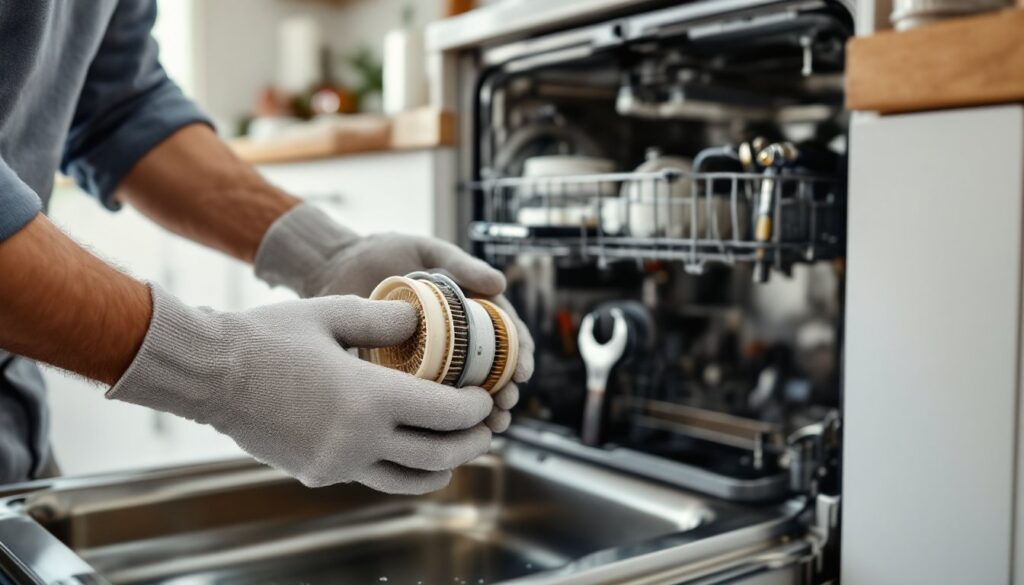
Step 1: Remove the lower dish rack. Twist the cylindrical filter assembly counterclockwise and lift it out. You’ll see three components: the coarse screen, fine filter, and micro-filter. Separate them and rinse under hot water, using a soft brush to remove stuck-on debris. Regular dishwasher cleaning habits help prevent buildup before it causes drainage issues.
Step 2: With the filter out, check the sump area for foreign objects, twist ties, broken glass, and fruit pits are common finds. Use a wet/dry vac to remove standing water and debris.
Step 3: Inspect the drain hose. It runs from the pump outlet (under the dishwasher) to either the garbage disposal or a sink drain tailpiece. Pull the dishwasher forward (it slides on adjustable feet) and check for kinks or clogs in the hose. The hose should have a high loop or air gap to prevent backflow, if it’s sagging below the sink drain level, water can siphon back into the dishwasher.
Step 4: If the filter and hose are clear but water still won’t drain, the drain pump may be faulty. Listen during the drain cycle, a humming sound with no water movement suggests a jammed or burned-out pump. Access the pump by removing the filter housing and sump cover. Disconnect the hoses and electrical connector, then unbolt the pump (usually two screws). Replacement pumps cost $50–$100 and are a straightforward swap.
For persistent clogs, check where the drain hose connects to the garbage disposal or sink drain. Many bosch dishwasher repairs stem from a forgotten knockout plug inside a new disposal, if the plug wasn’t removed during installation, water can’t drain.
Resolving Leaks and Water Puddles
Water pooling under the dishwasher can come from multiple sources, and pinpointing the leak takes some detective work. The most common culprits: a worn door gasket, a loose hose connection, or a cracked sump.
Door gasket leaks: The rubber seal around the door perimeter compresses when the door closes, preventing water from escaping during the wash cycle. Over time, the gasket hardens, cracks, or pulls away from the tub edge. Inspect the gasket for visible damage, paying attention to the bottom corners where stress is highest. You can clean the gasket with warm soapy water to remove grease and soap buildup, which can prevent a good seal. If the gasket is damaged, order a replacement for your specific model ($25–$50) and press it into the channel around the door opening, no tools required.
Hose connections: Run an empty cycle and check for leaks at the inlet valve (behind the kickplate), the drain hose connection (under the unit), and the sump hose (between the tub and pump). Tighten any loose hose clamps with a screwdriver or replace cracked hoses. If water’s dripping from the door during the cycle, the spray arm may be hitting dishes and deflecting water toward the door gasket. Rearrange the load and make sure nothing’s blocking the spray arm’s rotation.
Sump and tub cracks: Rare but serious, a cracked sump or tub usually requires professional repair or unit replacement. If water’s pooling under the dishwasher but all hoses and seals are intact, pull the unit forward and inspect the underside of the tub with a flashlight. Hairline cracks can sometimes be patched with a two-part epoxy rated for water contact, but this is a temporary fix at best.
Float switch issues: Bosch dishwashers have a float in the base pan (not the tub) that trips a switch if water leaks into the pan, shutting down the unit to prevent flooding. If your dishwasher won’t start and you see water in the base pan, that’s the float switch doing its job. Remove the water with a wet/dry vac, then trace the leak to its source before restarting.
When searching for bosch dishwasher repair near me or bosch refrigerator repair, many homeowners find that a clear diagnosis helps them decide whether to DIY or hire out. If you’ve narrowed down the problem to a simple part swap, like a gasket or pump, it’s usually worth tackling yourself. Complex electrical issues or control board failures, but, often justify bringing in a technician who has diagnostic software and access to OEM parts.
For additional context on appliance troubleshooting approaches, many DIYers reference resources from sites like Family Handyman to compare methods across different brands. Understanding where bosch dishwasher repairs fit into the broader landscape of home appliance maintenance helps homeowners make informed decisions about when to grab a wrench and when to call for backup.