Table of Contents
ToggleFlat roofs are workhorses, they shed water, carry HVAC units, and take brutal sun exposure without complaint. Until they don’t. When you spot ponding water, blisters, or a dark stain creeping across your ceiling, you’re facing a repair that’s beyond the scope of most DIY toolkits. Flat roof systems, whether built-up roofing (BUR), modified bitumen, EPDM rubber, TPO, or PVC membrane, require specialized knowledge, tools, and materials. A botched patch job can void warranties, trap moisture, and turn a $500 fix into a $5,000 tear-off. That’s why choosing the right flat roof repair contractor is as critical as the repair itself. Here’s how to vet companies, ask the right questions, and avoid the cowboys who’ll take your deposit and leave you with a tarp.
Key Takeaways
- Professional flat roof repair companies bring diagnostic expertise, specialized tools, and proper insurance that prevent costly mistakes like voiding warranties or trapping moisture.
- Verify that your flat roof repair contractor holds valid state/local licensing, $1M+ general liability insurance, workers’ compensation, and manufacturer certifications (GAF, Firestone, Carlisle) for extended warranties.
- Request written estimates with detailed scope of work, cost breakdowns, timelines, and warranty terms from at least three contractors before comparing prices to avoid hidden subcontracting or material shortcuts.
- Ask how the contractor will diagnose your leak and what repair method they recommend—flat roof repair requires specialized equipment and techniques that vary by membrane type (EPDM, TPO, Modified Bitumen, PVC).
- Avoid contractors who demand large upfront deposits (over 25%), skip permit requirements, offer to handle insurance claims, or use high-pressure sales tactics—these are common red flags in roofing scams.
Why Hiring a Professional Flat Roof Repair Company Matters
Flat roofs fail differently than pitched roofs. Water doesn’t run off, it pools, tests every seam, and exploits sloppy flashing. A residential flat roof typically has a slope of just ¼ inch per foot, barely enough to direct water toward drains or scuppers. That means the waterproofing membrane and its seams are the only things between you and interior damage.
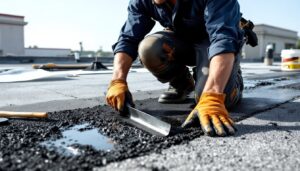
Professional flat roof repair services bring three things most homeowners lack: diagnostic skill, specialized tools, and material access. A pro can distinguish between a surface blister and delamination that signals deck rot. They’ll have the hot-air welders for TPO, the torches for modified bitumen, or the solvent applicators for EPDM, equipment that costs thousands and requires training to use safely.
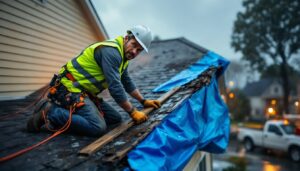
Just as important, reputable flat roof repair contractors carry liability insurance and workers’ comp. Flat roof work often involves parapet walls, edge details, and equipment curbs, fall hazards that can turn a weekend project into a lawsuit. If an uninsured handyman gets hurt on your property, your homeowner’s policy may not cover it.
Finally, pros understand building codes. The International Residential Code (IRC) and International Building Code (IBC) set standards for roof drainage, fire ratings, and insulation R-values. A DIY patch might stop a leak but fail an inspection if you ever pull a permit for an addition or sale.
Key Qualities to Look for in Flat Roof Repair Companies
Not all roofing contractors work on flat roofs, and not all flat roofers are equally skilled. Here’s what separates the pros from the pretenders.
Licensing, Insurance, and Certifications
Start with the paperwork. A legitimate contractor holds a state or local roofing contractor license (requirements vary, some states regulate roofers at the state level, others defer to counties or cities). Call your local building department or check your state’s contractor licensing board website to verify active status.
Ask for proof of general liability insurance (typically $1 million per occurrence minimum) and workers’ compensation coverage. Don’t take a certificate of insurance at face value, call the insurer to confirm the policy is current. Uninsured contractors are red flags, not bargains.
Manufacturer certifications matter for membrane systems. GAF, Firestone, Carlisle, and Johns Manville all run training programs and certify contractors who meet installation standards. A certified installer can often offer extended warranties (20–30 years) that aren’t available otherwise. For example, a local flat roofing contractor with Firestone MasterContractor status can provide a 20-year non-prorated warranty on an EPDM system, valuable leverage if you sell the home.
Experience with Your Specific Roof Type
Flat roof materials aren’t interchangeable, and repair techniques vary. An EPDM rubber roof uses lap sealant and bonding adhesive: a TPO membrane demands heat-welded seams at 500–600°F. A contractor who specializes in built-up tar and gravel may not have the equipment or training for single-ply membranes.
Ask how many roofs of your specific type they’ve repaired in the past year. Request photos of completed projects, before, during, and after. If your roof is a modified bitumen cap sheet, make sure they’ve torched or cold-applied mod-bit, not just brush-coated it with elastomeric paint (a temporary band-aid, not a repair).
Also consider commercial vs. residential experience. Commercial flat roofers often have better equipment and crew training, but they may not be interested in small residential jobs under $2,000. Conversely, a handyman who patches shingle roofs on weekends isn’t qualified to diagnose a TPO splice failure.
How to Research and Compare Local Flat Roof Contractors
Start your search locally. National franchise roofers exist, but flat roof repair is a regional trade, material availability, climate, and code requirements vary. A contractor in Phoenix knows polyurethane foam systems: one in Seattle specializes in high-rainfall drainage details.
Online directories like Angi and ImproveNet aggregate reviews, photos, and complaint histories. Look for patterns: repeated mentions of poor communication, missed deadlines, or surprise charges are warnings. A single bad review might be an outlier: five similar complaints aren’t.
Check the Better Business Bureau (BBB) for accreditation status and complaint resolution history. An A+ rating doesn’t guarantee quality, but an F rating with unresolved disputes is disqualifying.
Ask neighbors, property managers, and building inspectors for referrals. Inspectors see the aftermath of both good and bad work, they know which contractors pass on the first try and which leave code violations.
Get at least three written estimates. A professional estimate should include:
- Scope of work (specific repairs, square footage, materials by brand and model)
- Cost breakdown (labor, materials, disposal, permits)
- Timeline (start date, duration, weather contingencies)
- Payment terms (deposit amount, progress payments, final payment)
- Warranty details (workmanship warranty, material warranty)
Compare apples to apples. If one bid is 40% lower, find out why, they may be skipping deck inspection, using thinner materials, or planning to subcontract the work.
Questions to Ask Before Hiring a Flat Roof Repair Company
Vet contractors with specific questions that reveal their expertise and business practices.
“What’s causing the leak, and how did you diagnose it?”
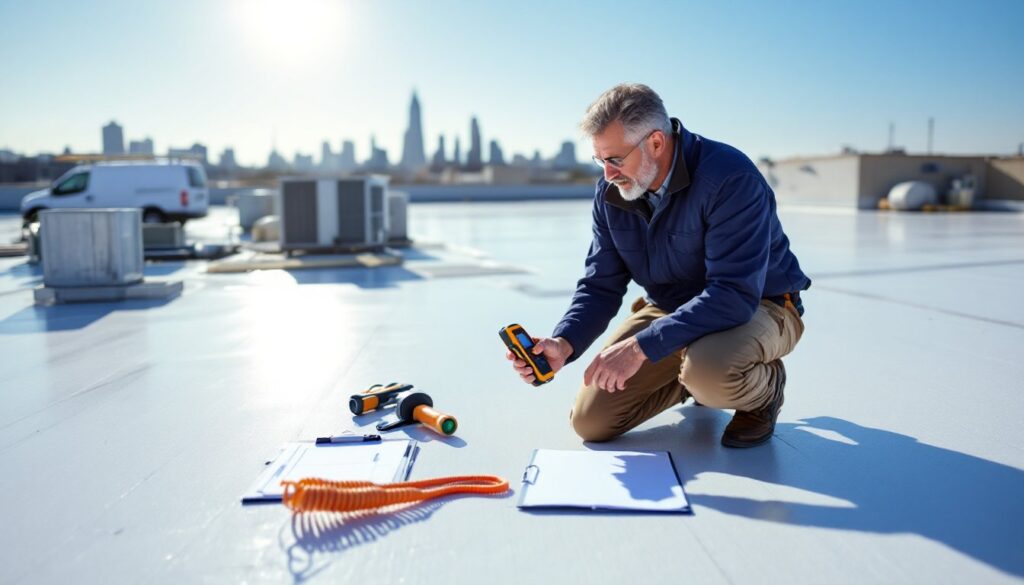
A good contractor will inspect the roof surface, check flashings, probe suspect areas for soft spots, and sometimes use infrared scanning or a moisture meter to map trapped water in the insulation. Beware anyone who quotes a repair price from the ground.
“What repair method do you recommend, and why?”
For small punctures in EPDM, a peel-and-stick patch with primer works. For widespread blistering on a BUR roof, a recover with a new cap sheet may be more cost-effective than piecemeal patches. Make sure they explain the logic, not just the price.
“Will you pull permits, and is that included in the estimate?”
Minor repairs (under 100 square feet, no structural work) often don’t require permits, but larger jobs or deck replacements do. If a permit is needed and the contractor skips it, you’re liable during resale or insurance claims.
“Who will be doing the actual work?”
Some companies subcontract to crews they don’t directly supervise. Ask if the crew is employed by the company, what their training is, and if the same foreman will be on-site daily.
“What does your workmanship warranty cover, and for how long?”
A standard workmanship warranty is 2–5 years and should cover leaks caused by faulty installation, not normal wear or storm damage. Get it in writing.
“How do you handle change orders and unexpected issues?”
Deck rot, failed insulation, or hidden structural damage can surface once the membrane is removed. A transparent contractor will document the issue, photograph it, and provide a written change order before proceeding.
Red Flags to Avoid When Choosing a Contractor
Some warning signs are subtle: others are sirens. Here’s what should send you looking elsewhere.
No written contract: Any contractor who wants to “just get started” without a signed, detailed contract is a liability. The contract protects both parties and establishes scope, cost, and timelines.
Large upfront deposits: Standard practice is 10–25% down to order materials, with progress payments tied to milestones. A contractor demanding 50% or more upfront may be financing other jobs with your money, or planning to vanish.
No local address or references: A PO box, out-of-state phone number, or refusal to provide local references suggests a fly-by-night operation. Storm chasers often follow hail and wind events, do quick (often substandard) work, and leave before callbacks pile up.
Pressure tactics: “This price is only good if you sign today” is a sales gimmick, not a reflection of material costs or scheduling. Reputable contractors provide estimates valid for 30 days.
Offer to handle your insurance claim: Some contractors promise to “work with your insurance” and waive your deductible. This is insurance fraud. You’re responsible for your deductible, and any contractor coaching you to inflate claims or misrepresent damage is putting your coverage at risk.
Verbal-only warranties: A warranty isn’t worth the paper it’s not printed on. Insist on written warranty terms, including what’s covered, exclusions, and the process for filing a claim.
Lack of manufacturer certification for membrane systems: If your roof is TPO, PVC, or EPDM and the contractor isn’t certified by the manufacturer, you’ll likely void the material warranty. Certified installers have access to technical support and can offer extended coverage.
Trust your gut. If a contractor shows up late, is vague about details, or dismisses your questions, those habits won’t improve once they have your deposit. Quality flat roof repair companies communicate clearly, document everything, and treat your home like it’s their own.