Table of Contents
ToggleSlate roofs are stunning, durable, and can last a century or more, but only if they’re properly maintained and repaired by someone who knows what they’re doing. When a slate tile cracks or a flashing fails, you can’t just grab a ladder and some roofing cement and call it good. Slate requires specialized knowledge, tools, and experience that most general roofers simply don’t have. Finding the right slate roof repair contractor near you means understanding what makes slate unique, knowing what problems to look for, and asking the right questions before anyone sets foot on your roof.
Key Takeaways
- Slate roof repair requires specialized expertise, equipment, and knowledge that general roofers lack—proper contractors understand weight distribution, correct fastener materials, and how to diagnose hidden issues like failed flashing or compromised underlayment.
- Common slate roof problems include broken tiles, failed flashing, nail failure, delamination, and deteriorated underlayment, with flashing being a leading cause of leaks that accelerates in freeze-thaw climates.
- Find qualified slate roof repair contractors through the National Slate Association, verified online reviews mentioning slate-specific work, project portfolios with before-and-after photos, and confirmation of proper licensing and at least $1 million liability insurance.
- Slate roof repair costs range from $500–$1,500 for spot repairs, $2,000–$6,000 for section repairs, and $1,500–$4,000 for flashing replacement, making professional repair far more cost-effective than full replacement.
- Never attempt DIY slate roof repair due to fragility, specialized equipment needs, fall hazards, and permit requirements—professional intervention protects your significant investment and ensures proper fastening and flashing integration.
- Extend the time between professional repairs by inspecting from the ground twice yearly, maintaining clean gutters, trimming overhanging branches, and scheduling professional inspections every 3–5 years to catch problems early.
Why Slate Roofs Require Specialized Repair Expertise
Slate isn’t asphalt shingles. It’s a natural stone material that’s quarried, split, and shaped by hand or machine into individual tiles. Each piece weighs between 6 to 10 pounds per square foot, and walking on slate without proper training is a fast way to crack tiles or create new leaks.
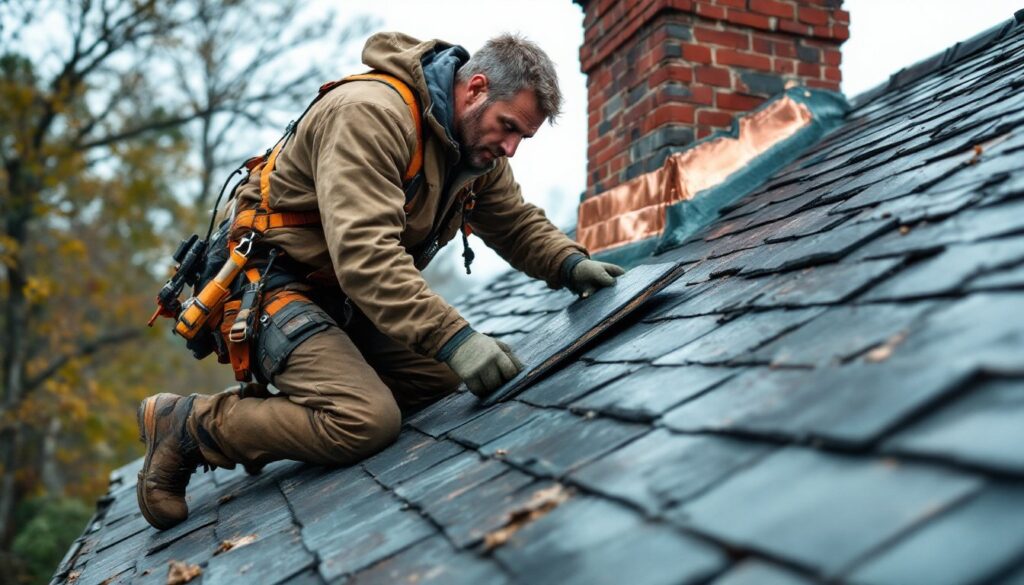
A qualified slate roofer understands how to distribute weight using roof jacks, hook ladders, and chicken ladders, specialized equipment that protects the roof surface. They also know how slate is fastened. Traditional slate roofs use copper or stainless steel nails, not galvanized or aluminum, because those metals corrode and cause premature failure. Repairing slate means matching the original installation method, thickness, color, and even the quarry source when possible.
Most importantly, slate repair often involves diagnosing hidden issues. A cracked tile might be a symptom of failed flashing, compromised underlayment, or even structural movement in the roof deck. General roofers who primarily work with composition shingles often misdiagnose these problems or recommend full replacement when targeted repairs would suffice. Specialized slate contractors can assess whether you need a spot repair, a section replacement, or a full restoration, saving homeowners thousands in unnecessary work.
Common Slate Roof Problems That Need Professional Attention
Slate tiles themselves can last 75 to 150 years depending on the grade, but the other components of a slate roof system wear out much faster. Here’s what typically goes wrong:
Broken or missing slates are the most visible problem. Tiles crack from impact (tree branches, hail), thermal stress, or improper foot traffic. A single missing slate can expose the underlayment to UV damage and water infiltration.
Failed flashing is a leading cause of leaks. Valleys, chimneys, dormers, and roof-to-wall transitions all rely on metal flashing, typically copper or lead-coated copper on quality slate roofs. When flashing corrodes or separates, water finds its way under the slate and into the roof deck. This is especially common in regions like slate roof repair Pittsburgh where freeze-thaw cycles accelerate metal fatigue.
Nail failure happens when original installers used inferior fasteners. Galvanized nails rust out in 30 to 50 years, causing slates to slip or blow off in high winds. A pro can spot “nail sickness” by looking for slipped tiles in a consistent pattern.
Delamination occurs in lower-grade slate that wasn’t properly selected or installed. The stone splits horizontally along its grain, flaking apart. This is a material failure, not an installation issue, and those tiles need replacement.
Deteriorated underlayment isn’t visible from the ground, but if your slate roof is 50+ years old and has never been opened up, the felt or tar paper underneath is likely rotted. During any repair that involves removing multiple slates, a good contractor will inspect and replace compromised underlayment.
How to Find Qualified Slate Roof Repair Contractors in Your Area
Not every roofing company listed online has actual slate experience. Here’s how to narrow your search:
Start with local trade organizations and historical preservation groups. The National Slate Association and regional historic preservation societies often maintain lists of vetted slate contractors. These specialists work on landmark buildings and high-end residential projects where quality matters more than speed.
Check online review platforms like Angi and similar services, but filter results carefully. Look for contractors with multiple reviews specifically mentioning slate work, not just general roofing. Pay attention to reviews that describe diagnostic accuracy, matching tile sources, and attention to flashing details.
Ask for project portfolios and references. A legitimate slate contractor will have before-and-after photos of completed repairs, not just new installations. Call past clients and ask specific questions: Did the contractor walk the roof or just estimate from the ground? Were they able to source matching slate? Did the repair hold up after several winters?
Verify licensing, insurance, and bonding. Slate work often requires specialized liability coverage because of the high material value and fall risk. Confirm the contractor carries general liability insurance of at least $1 million and workers’ compensation for all crew members. Some states require specific roofing contractor licenses: check your local jurisdiction.
Get multiple estimates, but don’t default to the lowest bid. Slate repair done wrong costs more to fix than doing it right the first time. A detailed estimate should list quantities (number of slates, linear feet of flashing), material specs (slate grade, fastener type, flashing gauge), and a clear scope of work.
Questions to Ask Before Hiring a Local Slate Roofer
Don’t hire anyone until you’ve asked these questions:
- How many slate roofs do you repair annually? You want a contractor who does slate work regularly, not someone who dabbles.
- Where do you source replacement slate? They should be able to match your existing tiles by thickness, color, and texture. Some jobs require salvaged slate from the same quarry era.
- What fasteners and flashing materials do you use? The correct answer is copper or stainless steel nails and copper flashing (or terne-coated stainless in some applications). Anything else is a red flag.
- Do you use hook ladders and roof jacks? This shows they understand how to work on slate without causing damage.
- Will you provide a written warranty? Reputable contractors offer warranties on both labor (typically 5–10 years) and materials.
- Can you provide references from slate projects within the last two years? Recent work matters more than projects from a decade ago.
What to Expect: Slate Roof Repair Costs and Timelines
Slate repair isn’t cheap, but it’s almost always more cost-effective than replacement if the majority of your roof is in good shape.
Spot repairs for a handful of broken or missing slates typically run $500 to $1,500, depending on access, tile availability, and flashing work. If the contractor needs to special-order matching slate or work around complex roof geometry, costs increase.
Section repairs that involve replacing 20 to 50 slates and associated flashing generally cost $2,000 to $6,000. This is common when a single roof plane has sustained storm damage or when a valley needs to be rebuilt.
Flashing replacement alone, re-flashing a chimney or valley without replacing slate, runs $1,500 to $4,000 depending on size and metal type. Copper flashing costs more upfront but lasts 50+ years.
Material costs vary by region and availability. Salvaged slate that matches historic installations can cost $8 to $15 per tile or more for rare colors. New quarried slate ranges from $5 to $12 per square foot installed, depending on grade and source.
Timelines depend on weather, scheduling, and material lead times. Simple repairs might be completed in a day, but if custom slate needs to be ordered or if extensive flashing work is required, expect two to four weeks from contract signing to completion. Winter work is possible in some regions but more expensive due to cold-weather precautions.
Keep in mind that slate work is detail-intensive. Rushing the job leads to mistakes. A quality contractor won’t cut corners to meet an arbitrary deadline.
DIY vs. Professional Slate Roof Repair: When to Call the Experts
Here’s the hard truth: unless you have professional roofing experience and the right equipment, slate repair is not a DIY project.
Slate is fragile underfoot and requires specialized ladders and staging to avoid breakage. A single misstep can crack multiple tiles, turning a small repair into a much larger problem. Even if you manage to remove and replace a slate without damaging surrounding tiles, improper fastening or flashing integration will lead to leaks.
Safety is the biggest concern. Slate roofs are often steeply pitched (8:12 to 12:12 or steeper), and working at height without fall protection and proper anchoring is dangerous. OSHA requires fall protection for any work above 6 feet, and slate roofs routinely exceed 20 to 30 feet.
There are also permit and code considerations. Many jurisdictions require permits for roofing work, and insurance companies may deny claims if unpermitted or amateur repairs contribute to water damage or structural issues. For more complex projects involving structural concerns, exploring resources like local home repair programs can connect homeowners with qualified professionals.
When to call a pro: Always. Seriously. Slate roofs represent a significant investment, often $20,000 to $50,000 or more for a full installation. Protecting that investment with proper repairs is worth the cost of hiring a specialist. Even home improvement experts consistently recommend professional intervention for slate roofing work due to the unique skill set required.
If budget is a concern and you’re facing major repairs, look into financing options or assistance programs for home repairs rather than attempting the work yourself.
Maintaining Your Slate Roof Between Professional Repairs
While you shouldn’t attempt repairs yourself, there are maintenance steps homeowners can take to extend the life of a slate roof and catch problems early.
Inspect from the ground twice a year, spring and fall. Use binoculars to look for missing, slipped, or visibly cracked slates. Check valleys and flashing for signs of rust or separation. Look for moss or algae growth, which can hold moisture against the slate and accelerate wear.
Keep gutters clean. Clogged gutters cause water to back up under the lower course of slates, damaging underlayment and fascia. Clean gutters at least twice annually, more often if you have overhanging trees.
Trim back tree branches that hang over the roof. Branches scraping against slate during wind events cause surface damage and can break tiles. Falling limbs are an even bigger risk.
Don’t pressure wash or walk on the roof. Pressure washing can force water under slates and damage the surface texture. If moss needs removal, hire a professional who uses low-pressure methods and proper safety equipment.
Schedule professional inspections every 3 to 5 years. A qualified slate contractor can spot early signs of nail failure, flashing fatigue, or underlayment deterioration before they become major problems. Annual inspections are smart for roofs over 50 years old.
Document everything. Keep records of all repairs, inspections, and maintenance. This documentation helps future contractors understand the roof’s history and can be valuable if you sell the property. Slate roofs are a selling point, and a well-maintained roof with documented care commands a premium.
Proper maintenance won’t eliminate the need for repairs, slate roofs will eventually need attention, but it maximizes the intervals between service calls and helps you budget for work before emergencies happen.