Table of Contents
ToggleWater stains spreading across a ceiling. Puddles forming after a rainstorm. If you’ve got a flat roof, these are the signs that send any homeowner scrambling for solutions. Flat roofs are economical and practical, but their minimal pitch makes them prone to leaks if drainage falters or the membrane gets compromised. The good news? Most flat roof leaks are repairable without calling in a roofing crew, if you catch them early and know what you’re doing. This guide walks through spotting the problem, understanding what caused it, and tackling both emergency patches and lasting fixes.
Key Takeaways
- Identifying a flat roof leak requires investigating both interior water stains and roofing surface damage like ponding water, blisters, cracks, and worn flashing to locate the actual breach.
- Common causes of flat roof leaks include inadequate drainage slope, faulty flashing, membrane damage from age or impact, clogged drains, and thermal expansion stress on seams and fasteners.
- Successful flat roof leak repair demands clean, dry surfaces, matched patch materials compatible with your membrane type (EPDM, TPO, or BUR), and proper sealing around edges to prevent water from working underneath.
- Temporary fixes like wet-patch cement or peel-and-stick tape can hold for weeks, but permanent repairs—including full membrane replacement, roof recoating, or flashing overhaul—require professional-grade technique and dry working conditions.
- Routine maintenance such as clearing drains quarterly, inspecting seams and flashing semiannually, addressing ponding water, and applying roof coatings every 5–10 years prevents the majority of flat roof leak issues from developing.
How to Identify a Flat Roof Leak
Finding the source of a flat roof leak isn’t always straightforward. Water can travel along seams, under the membrane, or across joists before it finally drips through your ceiling, sometimes several feet from the actual breach.
Start inside. Look for water stains, discoloration, or sagging drywall. If the ceiling is wet, note the location and size. Head into the attic or crawl space (if accessible) with a flashlight and trace the moisture back along rafters or decking. Wet insulation, dark streaks, or visible drips on the underside of roof sheathing will point you in the right direction.
Once you’ve narrowed down the interior damage, get on the roof. Always use a sturdy ladder, wear rubber-soled boots, and avoid walking on wet roofing membrane, it’s slippery and you can cause more damage. Look for obvious trouble spots:
- Ponding water: Puddles that stick around 48 hours after rain indicate poor drainage or sagging substrate.
- Blisters and bubbles: Raised pockets in the membrane mean trapped moisture or air beneath the surface.
- Cracks and splits: Especially along seams, around flashing, or near roof penetrations like vents and HVAC units.
- Worn or missing flashing: Metal or rubberized flashing around edges, parapet walls, or skylights should be intact and sealed.
If you’re dealing with flat roof repair in wet weather, mark suspected leak points with chalk or bright tape so you can return when it’s dry enough to work safely. Never attempt a permanent repair on a soaking roof, adhesives and coatings won’t bond properly.
Common Causes of Flat Roof Leaks
Understanding why flat roofs leak helps you prevent repeat failures. Here are the usual suspects:
Ponding Water
Flat roofs should have at least a 1/4-inch per foot slope toward drains or scuppers. If the pitch is inadequate or the substrate has sagged, water pools. Over time, UV exposure and standing water degrade even the toughest membranes. According to cost data on common repairs, ponding-related damage is one of the priciest issues to fix because it often requires substrate leveling.
Faulty or Aging Flashing
Flashing seals transitions, roof edges, parapet walls, vent pipes, HVAC curbs. If caulk cracks, metal corrodes, or rubberized boots shrink, water sneaks in. Flashing failures are especially common around chimneys and skylights.
Membrane Damage
Built-up roofing (BUR), modified bitumen, EPDM rubber, TPO, and PVC all have finite lifespans. Foot traffic, falling branches, hail, or improper installation can cause tears, punctures, or delamination. EPDM seams are notorious for peeling if the adhesive wasn’t applied correctly.
Clogged Drains and Scuppers
Leaves, debris, and sediment block drainage paths. Water backs up, finds weak spots, and infiltrates. Clearing drains quarterly is cheap insurance.
Thermal Expansion and Contraction
Roofing materials expand in heat and contract in cold. Over years, this movement stresses seams and fasteners, creating gaps.
Essential Tools and Materials for Flat Roof Repair
Stock up before you climb. Running back and forth wastes daylight and tests your patience.
Tools:
- Utility knife with fresh blades (for cutting membrane patches)
- Putty knife or trowel (applying mastic or cement)
- Stiff-bristle brush or broom (cleaning debris)
- Caulk gun (for sealants)
- Paint roller and tray (if coating large areas)
- Measuring tape and chalk line
- Safety gear: rubber-soled boots, work gloves, safety glasses, and a dust mask if grinding or cutting
Materials (match to your roof type):
- Roofing cement or mastic: Wet-patch formulas work in damp conditions for temporary fixes.
- Patching membrane: EPDM rubber patches, TPO welding strips, or fiberglass mesh with resin (depends on your existing roof).
- Elastomeric roof coating: Reflective, flexible coatings seal small cracks and extend membrane life.
- Peel-and-stick flashing tape: Rubberized, self-adhesive tape for sealing seams and penetrations.
- Roofing nails or screws (if re-securing loose flashing or membrane edges)
- Primer: Required for some EPDM and TPO adhesives to bond properly.
Make sure the patch material matches your existing roof. You can’t reliably glue EPDM to TPO without specialty primers, and mixing incompatible materials voids most manufacturers’ warranties.
Step-by-Step Flat Roof Leak Repair Process
Here’s how to repair a leaking flat roof, from quick stopgaps to lasting solutions. Always work in dry conditions for permanent repairs, moisture under the patch traps water and accelerates rot.
1. Clean the Damaged Area
Sweep away leaves, dirt, and loose gravel. For best flat roof leak repair results, scrub the area with a stiff brush and let it dry completely. If algae or moss is present, use a deck cleaner or diluted bleach solution, rinse, and allow 24 hours to dry.
2. Cut Away Damaged Membrane
If there’s a blister or torn section, use a utility knife to make an X-shaped cut through the bubble or tear. Peel back the flaps to expose the substrate. If the decking underneath is wet, let it air out or use a heat gun on low to speed drying. Wet sheathing won’t hold adhesive.
3. Apply Roofing Cement or Adhesive
Spread a generous layer of roofing mastic under the membrane flaps and press them down firmly. Smooth out air pockets. For larger holes, apply mastic to the cleaned substrate.
4. Install the Patch
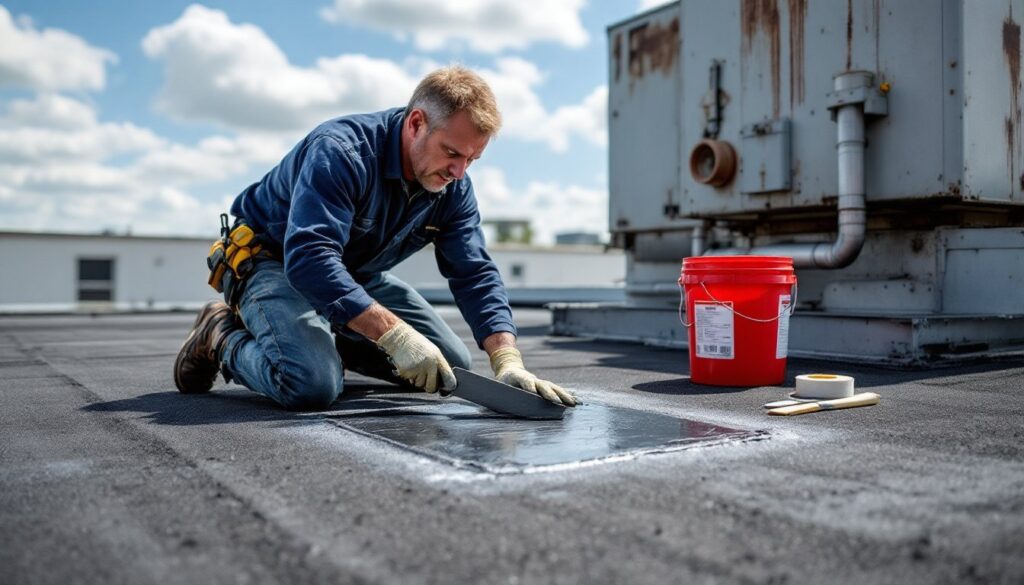
Cut a patch from matching membrane material, at least 6 inches larger than the damaged area on all sides. Round the corners to prevent peeling. Coat the back of the patch with adhesive (or use peel-and-stick if your membrane allows), center it over the repair, and press down firmly. Roll it with a hand roller or the back of a trowel to ensure full contact.
5. Seal the Edges
Run a bead of roofing cement or elastomeric sealant around the patch perimeter. Feather it out with a putty knife for a smooth transition. This prevents water from working under the patch edge.
6. Coat (Optional but Recommended)
Once the patch cures (check product instructions, usually 24 hours), apply a layer of reflective roof coating over the entire repair area. This adds UV protection and blends the patch into the surrounding membrane. For widespread small cracks, consider permanent sealing methods that coat the entire roof surface.
Temporary vs. Permanent Repair Solutions
Temporary Fixes
If you’re caught in a downpour or need to buy time before a pro arrives, a temporary patch can stop water intrusion for weeks or even months.
- Wet-patch roofing cement: Formulated to stick in damp conditions. Trowel it over the leak, extending 6 inches beyond the visible damage. It won’t last forever but holds until you can do a proper repair.
- Tarp and sandbags: For large damaged sections or during storms, stretch a heavy-duty polyethylene tarp over the area, anchor it with sandbags or 2×4 boards (never puncture the membrane with nails unless absolutely necessary).
- Peel-and-stick tape: Rubberized flashing tape works as a quick seal on small cracks or seams. Clean and dry the surface first for best adhesion.
Permanent Solutions
Permanent repairs demand proper surface prep, compatible materials, and dry conditions. For knowing exactly how to repair leak in flat roof situations, always match the patch to your membrane type, EPDM, TPO, modified bitumen, or BUR each require specific adhesives and techniques.
- Full membrane replacement: If damage is widespread or the roof is 20+ years old, patching is a band-aid. Tear-off and replacement may be more cost-effective long-term.
- Recoating: If the membrane is sound but weathered, a liquid-applied roof coating (acrylic, silicone, or polyurethane) can extend its life by 10–15 years. This is especially effective for BUR or modified bitumen roofs.
- Flashing overhaul: Corroded metal flashing should be removed and replaced with new galvanized steel or rubberized EPDM boots. Seal all edges with compatible mastic.
When to Call a Pro
If the leak is near load-bearing walls, if you find rot in the roof decking, or if your membrane is delaminating in multiple spots, bring in a licensed roofer. Structural repairs often require permits and engineering assessments, and a botched DIY job can void insurance claims.
Preventive Maintenance to Avoid Future Leaks
Most leaking flat roof repair jobs are preventable with routine upkeep. Schedule these tasks twice a year, spring and fall, and after major storms.
Clear Drains and Scuppers
Remove leaves, twigs, and sediment. Flush drains with a hose to confirm water flows freely. Install drain strainers or leaf guards to reduce clogs.
Inspect Seams and Flashing
Walk the perimeter and check every transition point. Look for lifted edges, cracked caulk, or rust. Re-seal suspect areas with compatible sealant before they become full-blown leaks.
Address Ponding Water
If puddles linger more than 48 hours, you’ve got a drainage problem. Options include installing additional drains, building up low spots with tapered insulation, or adding a surface slope with lightweight concrete.
Trim Overhanging Branches
Falling limbs and constant debris accelerate membrane wear. Keep trees pruned back at least 6 feet from the roofline.
Apply Roof Coatings
Every 5–10 years (depending on climate and membrane type), apply a fresh coat of elastomeric roof coating. This renews UV protection and seals micro-cracks before they widen.
Document and Track
Take photos during inspections and note repair dates. If you’re dealing with a warranty claim or selling the home, a maintenance log proves due diligence.
Conclusion
Flat roof leaks don’t have to mean disaster. With a systematic approach, spotting the problem, understanding its cause, gathering the right materials, and executing a solid repair, most homeowners can handle minor to moderate leaks without professional help. Keep up with preventive maintenance, address ponding and flashing issues early, and you’ll stretch your flat roof’s lifespan well beyond its rated years.