Table of Contents
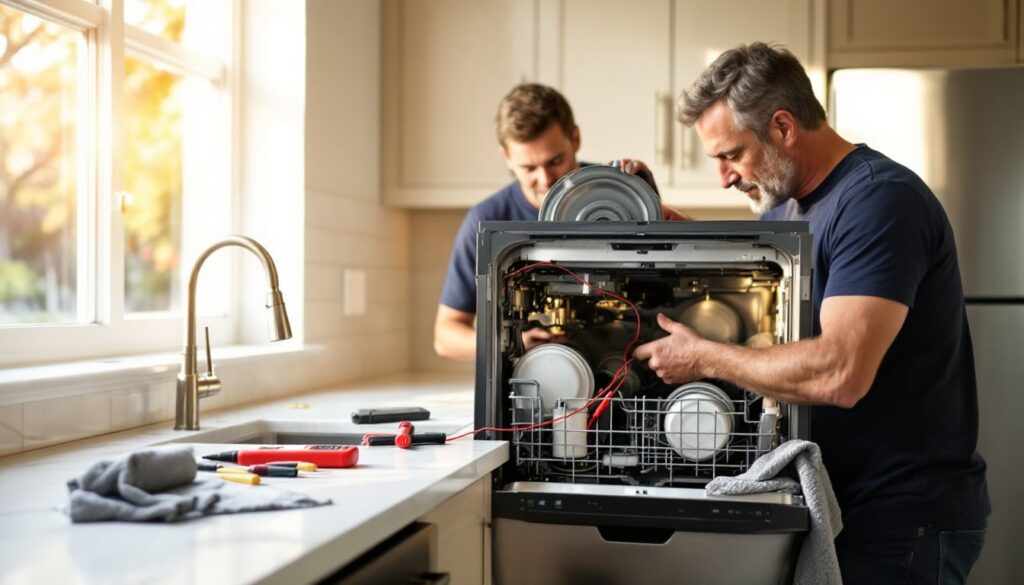
ToggleWhen your Maytag dishwasher starts acting up, you don’t always need a repair tech on speed dial. Most common problems, from a dead control panel to dishes that come out still grimy, can be tackled with basic tools and a methodical approach. This guide walks through diagnosing and fixing the most frequent Maytag dishwasher issues, helping homeowners decide when to grab a multimeter and when to grab the phone. Whether it’s a washer and dryer repair skill set you’re building or you’re just tired of hand-washing plates, this troubleshooting roadmap gets your dishwasher back in service.
Key Takeaways
- Most Maytag dishwasher repairs can be handled by homeowners using basic tools and a methodical troubleshooting approach, starting with simple checks like power supply and door latch functionality.
- Common issues like standing water, poor cleaning, and non-starting units often stem from clogged filters, failed drain pumps, or defective door latches—all fixable components costing $20–$100.
- Always disconnect power before disassembling your Maytag dishwasher, and use a multimeter to test continuity on switches, fuses, and valves to pinpoint electrical failures accurately.
- DIY-friendly repairs include cleaning spray arms, replacing gaskets, and clearing drain hoses, but control board replacement and complex electrical work warrant calling a certified technician.
- Maytag dishwashers typically last 10–13 years; if repair costs exceed 50% of a new unit’s price or multiple components fail on older machines, replacement becomes the smarter financial choice.
Diagnosing Your Maytag Dishwasher Problem
Start every repair by isolating the symptom. A dishwasher that won’t start is very different from one that runs but leaves food residue. Walk through a simple checklist before pulling out tools.
Initial checks:
- Power supply: Confirm the unit is plugged in and the circuit breaker hasn’t tripped. Some Maytag models have a hard-wired connection, check the breaker panel.
- Door latch: The door must click fully shut for the cycle to begin. Inspect the latch assembly for cracks or misalignment.
- Control lock: Many models feature a control lock (often labeled “Heated Dry” and “Normal” held for three seconds). If the control panel is unresponsive, this may be engaged.
- Water supply: Ensure the inlet valve under the sink is fully open.
Once you’ve ruled out simple oversights, note the exact behavior. Does the unit hum but not fill? Does it fill but not drain? Does the cycle start but stop mid-wash? This symptom profile narrows your repair path significantly.
Tools you’ll likely need:
- Multimeter (for testing continuity and voltage)
- Phillips and flathead screwdrivers
- Needle-nose pliers
- Flashlight
- Towels and a shallow pan (for water spills)
Safety first: Disconnect power at the breaker or unplug the unit before any repair that involves disassembly or electrical testing. Standing water can hide electrical hazards.
Fixing a Maytag Dishwasher That Won’t Start
A non-starting dishwasher usually points to electrical issues or a failed door latch. Here’s how to troubleshoot from simplest to most involved.
1. Test the door latch and switch
The door latch switch signals the control board that it’s safe to run. Remove the inner door panel by unscrewing the screws around the perimeter (typically six to ten screws). Locate the latch assembly at the top. Use a multimeter set to continuity mode and test the switch terminals, you should see continuity when the latch is engaged, none when open. If the switch fails this test, replace the latch assembly (part typically runs $20–$40).
2. Inspect the thermal fuse
Maytag dishwashers include a thermal fuse on the control board to prevent overheating damage. If this fuse blows, the unit goes completely dead, no lights, no sounds. With the inner door panel off, locate the thermal fuse (a small cylindrical component, often near the control board). Test for continuity: if there’s none, the fuse is blown. Replacement fuses cost under $10, but investigate why it blew, blocked vents or a failing motor can trigger thermal fuse failure.
3. Check the control board and touchpad
If the latch and fuse test good but the unit still won’t respond, the control board or touchpad may be faulty. Water intrusion or power surges can damage these components. Inspect for visible burn marks, corrosion, or moisture. Replacement control boards run $150–$300 depending on the model. Some DIYers swap these out, but if you’re uncomfortable with circuit board work, this is a reasonable point to call for professional dishwasher repair services.
Resolving Drainage Issues in Your Maytag Dishwasher
Standing water at the end of a cycle is one of the most common complaints. It’s usually a clog or a failed pump, and both are fixable.
1. Clear the filter and sump area
Remove the lower dish rack and locate the cylindrical filter assembly at the bottom of the tub. Twist counterclockwise to remove it, then rinse under hot water to clear food particles and grease buildup. Check the sump (the area beneath the filter) for debris, coins, glass shards, and twist ties are frequent culprits.
2. Inspect the drain hose
The drain hose connects the dishwasher to the garbage disposal or sink drain. Pull the dishwasher out from under the counter (disconnect power first) and check the hose for kinks or clogs. Detach the hose at both ends and run water through it. If water doesn’t flow freely, replace the hose (standard 5/8-inch ID hose, available at any hardware store).
3. Test the drain pump
With the lower access panel removed, locate the drain pump (usually near the motor assembly). Listen during a drain cycle, if you hear a hum but no water movement, the pump impeller may be jammed. Rotate the impeller by hand to check for obstructions. If the pump is silent, test it with a multimeter for continuity. A failed drain pump requires replacement (part costs $50–$100, plus labor if you’re not comfortable with pump swaps).
4. Check the air gap and garbage disposal
If your sink has an air gap (a small chrome cylinder on the countertop), remove the cap and clear any debris. If the dishwasher drains into a garbage disposal, ensure the knockout plug was removed during installation, this is a common oversight that blocks drainage entirely.
Troubleshooting Poor Cleaning Performance
Dishes coming out dirty doesn’t always mean the dishwasher is broken. Often it’s a maintenance or loading issue, but component failures do occur.
1. Inspect and clean the spray arms
Remove both the upper and lower spray arms (they typically pull straight off or twist to release). Hold each arm up to a light and look through the spray holes, mineral deposits and food particles clog these over time. Use a toothpick or small wire to clear each hole, then rinse thoroughly. Hard water areas may require monthly spray arm cleaning.
2. Check water temperature and pressure
Maytag dishwashers need water at 120°F for proper detergent activation and grease removal. Run the kitchen faucet until the water is hot, then start the dishwasher to ensure it fills with hot water. Low water pressure (below 20 psi) can also cause poor performance, test by timing how long it takes to fill a gallon jug at the kitchen sink. If it’s slower than 20 seconds, you may have a pressure issue upstream.
3. Test the water inlet valve
A partially clogged or failing inlet valve restricts water flow into the tub. Locate the valve where the water supply line connects to the dishwasher (lower left corner in most models). Remove the supply line and inspect the inlet screen for sediment. If cleaning doesn’t help, test the valve solenoid with a multimeter, it should read 500–1500 ohms. Replace if out of range (part costs $30–$60).
4. Verify detergent type and amount
Use only automatic dishwasher detergent, never hand dish soap, which creates excessive suds and rinses poorly. If you have soft water, reduce detergent amount by a third: hard water may require a rinse aid to prevent spotting. Consider running a dishwasher cleaner like Affresh monthly to remove buildup.
Repairing Maytag Dishwasher Leaks
Leaks can originate from the door, tub, or internal components. Pinpoint the source before ordering parts.
1. Replace the door gasket
The rubber door gasket (or seal) runs along the bottom and sides of the door opening. Over time, it cracks, warps, or accumulates mold. Inspect for visible damage or gaps when the door is closed. To replace, peel off the old gasket (it’s held in place by friction or light adhesive) and press a new one into the channel. OEM gaskets cost $15–$30 and take ten minutes to install.
2. Check the door hinges and springs
If the door doesn’t close flush, it may not seal properly. Examine the hinge assemblies for wear or broken springs. Replacing door springs requires careful disassembly, the springs are under tension and can snap if released improperly. Wear safety glasses and work slowly. If you’re not confident, this is a job to hand off.
3. Inspect the tub and pump seals
Leaks from underneath often trace back to the pump seal or tub gasket. With the dishwasher pulled out and the lower access panel removed, run a short cycle and watch for drips. A failing pump seal allows water to escape from the motor housing, this typically requires pump replacement. Tub cracks are rare but can happen from impact or freeze damage: these usually mean it’s time for a new dishwasher unless the unit is high-end.
4. Tighten hose connections
Check all hose clamps at the inlet valve, drain hose, and recirculation lines. A loose clamp can spray water during high-pressure fill or drain cycles. Replace spring clamps with worm-drive clamps for a more secure, adjustable fit.
When to Call a Professional vs. DIY Repair
Not every repair is a weekend project. Here’s how to gauge whether to proceed or call in a tech.
DIY-friendly repairs:
- Cleaning or replacing filters, spray arms, and gaskets
- Testing and replacing door latches, thermal fuses, and inlet valves
- Clearing drain hoses and checking for simple clogs
- Basic continuity testing with a multimeter
These tasks require no special licensing, involve low voltage (if any), and use readily available parts. Expect to invest $20–$100 in parts and 1–3 hours of your time.
Call a pro for:
- Control board replacement (especially if you’re unsure about electronics)
- Pump motor replacement on built-in or high-end models
- Leak diagnosis that involves cutting into cabinetry
- Electrical issues beyond the appliance itself (breaker problems, wiring faults)
- Warranty-covered repairs (DIY work often voids manufacturer coverage)
Repair costs vary widely by region, but many homeowners find that typical dishwasher repair expenses range from $150–$300 for common fixes. If your dishwasher is over ten years old or the repair estimate exceeds half the cost of a new unit, replacement may be the smarter move.
A word on appliance lifespan: Maytag dishwashers typically last 10–13 years with proper maintenance. If you’re facing multiple component failures on an older unit, consider the cumulative cost. Similar logic applies to maytag refrigerator repair, maytag washer and dryer repair, or any major appliance nearing the end of its service life, sometimes the best repair is an upgrade.
Finding a qualified tech: If you do call for help, look for technicians certified by the International Society of Appliance Professionals (ISAP) or factory-trained for Maytag appliances. Ask for an upfront diagnostic fee and parts estimate. Many pros offer guidance on whether a repair makes financial sense, especially when you need maytag refrigerator repairs or other appliance work done at the same visit.
Conclusion
Most Maytag dishwasher problems boil down to a handful of components: door latches, pumps, valves, and control boards. With a multimeter, basic hand tools, and a willingness to troubleshoot methodically, homeowners can handle the majority of repairs without a service call. Start with the simplest explanation, check power, clean filters, inspect hoses, and work your way deeper only if needed. When a repair crosses into complex electrical work or requires specialized tools, calling a pro is the smarter play. Either way, understanding what’s happening inside the machine puts you in control of the fix.